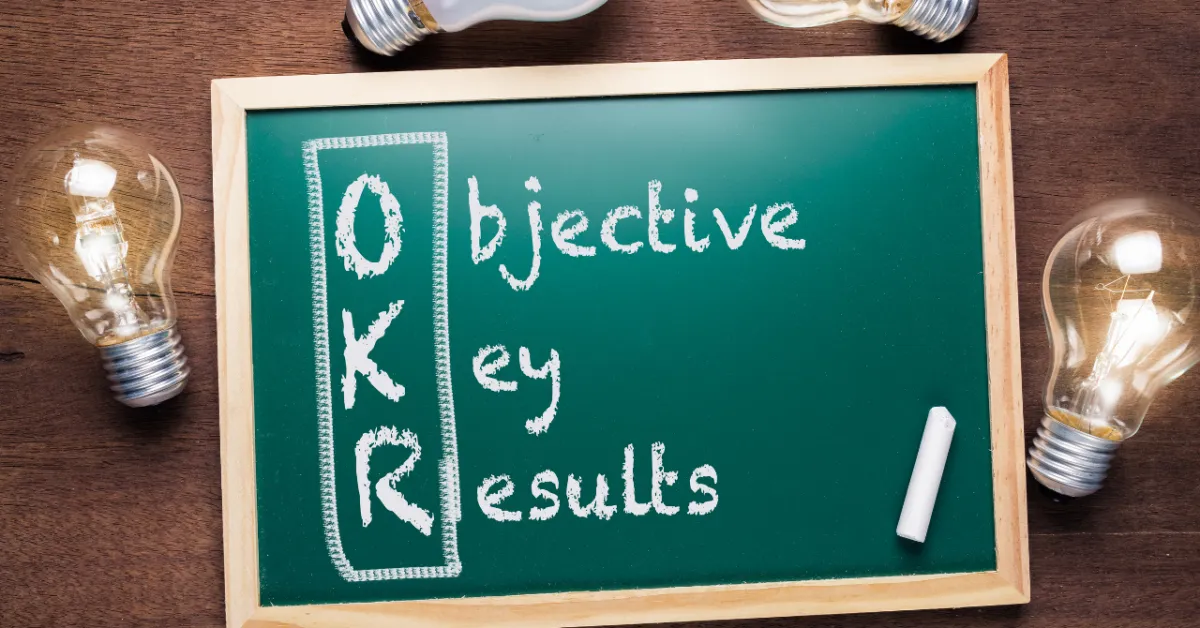
Using OKRs to Grow Revenue
A Practical RevOps Approach for Small Businesses.
When people hear about OKRs (Objectives and Key Results), they often associate them with tech giants like Google.
But OKRs aren’t just for large corporations.
For small and mid-sized businesses, where margins are tight and teams are lean — clarity and focus can make the difference between steady growth and constant stress.
In this article, we’ll look at OKRs specifically through a Revenue Operations (RevOps) lens — and how they connect directly to CRM and automation.
First: The Difference Between OKRs and KPIs
Many business owners use KPIs already:
Monthly revenue
Lead volume
Conversion rate
Average job size
Repeat customer rate
These are essential.
But KPIs tell you where you are.
OKRs decide what you are intentionally trying to change.
Here’s a simple way to think about it:
KPIs measure performance.
OKRs drive change.
For example:
If your current repeat customer rate is 35%, that’s a KPI.
If you decide, “This quarter, we will increase repeat customers to 50%,” that becomes an OKR.
OKRs are not about tracking everything.
They’re about choosing what matters most right now.
Why Revenue-Focused OKRs Matter for Small Businesses
In small businesses, revenue growth usually depends on improving one or two key levers:
More leads
Better conversion
Higher average ticket
Increased repeat business
Without focus, teams try to improve everything at once.
With OKRs, you choose one primary growth lever per quarter.
For example:
Objective: Improve repeat revenue
Key Results:
Increase repeat purchase rate from 35% to 50%
Ensure 90% of customers receive a follow-up within 30 days
Double the number of online reviews
Now your revenue strategy has direction.
But direction alone doesn’t create results.
The Revenue Execution Structure
OKR → KPI → Customer Process → CRM → Automation
Revenue doesn’t grow because of goals.
It grows because of systems.
Here’s the structure that makes OKRs actually work.
1. OKR: Choose the Revenue Lever
Example:
Objective: Improve sales performance
Key Result: Increase conversion rate from 20% to 30%
This clarifies not only what you want to improve, but how success will be measured.
2. KPI: Identify the Gap
You measure:
Number of inquiries
Response time
Follow-up attempts
Close rate
Now you can see where breakdowns occur.
But measurement alone doesn’t fix anything.
3. Design the Customer Process
Now we move from strategy to operations.
Ask:
How quickly are we responding to new inquiries?
How many follow-ups are required before closing?
Who is responsible at each stage?
What qualifies as “followed up”?
This step is often skipped.
If the process is unclear, software won’t save you.
4. Why CRM Becomes Central in RevOps
In a revenue-focused strategy, CRM is not just a contact database.
It becomes your revenue engine.
A well-designed CRM system allows you to:
Track lead status in real time
Monitor pipeline stages
Record follow-up activity
Analyze lost deals
Identify bottlenecks
Unlike accounting software, which shows you revenue after the fact,
CRM shows you the process that creates revenue.
That’s why, in a RevOps framework, CRM sits at the center.
5. Automation Creates Consistency
Once your revenue process is defined, automation strengthens it.
For example:
Automatic email response to new inquiries
Task reminders for follow-ups
Workflow triggers when a deal changes stage
Review requests sent after project completion
Automation doesn’t replace people.
It removes forgetfulness.
And in small teams, consistency is everything.
Why This Matters
Many local businesses operate with:
Small teams
Seasonal fluctuations
Strong word-of-mouth dynamics
Limited hiring flexibility
You can’t just “add more salespeople” every time growth stalls.
Instead, you must design a smarter revenue system.
That’s where OKR + KPI + CRM + automation come together.
OKR defines what you want to improve.
KPI measures where you stand.
CRM structures the daily execution.
Automation ensures consistency.
A Simple Starting Point
If you want to apply this next quarter, start here:
What is the single most important revenue lever we need to improve?
What measurable result defines success?
What specific actions inside our CRM drive that result?
What can we automate to reduce manual follow-up?
Even answering these questions will shift your business from reactive to intentional growth.
Final Thought
Revenue growth is rarely about working harder.
It’s about aligning strategy with systems.
OKR gives you direction.
CRM gives you structure.
Automation gives you stability.
When those three are connected, growth stops feeling chaotic —
and starts feeling designed.
Curious to learn more? Drop us a quick message — we’re always here to help.

If you're interested in topics like this, let's connect!
At Kaimuki Solutions, we occasionally run special promotions—on no fixed schedule—offering a free consultation session and initial setup of our marketing automation/CRM system (a service that typically starts at $2,000) to a limited number of businesses. To get notified about these offers, please subscribe to the KAISOL Newsletter here!
